Pool Remodeling
Pool remodeling in Orange County and LA: resurfacing, tile and coping, new equipment, decking and spa additions, permitted and built with the rest of the yard.
Tell us about the house. A project manager will call to set up a walk-through.
Prefer to talk? Call (714) 449-9035
Most of the calls we get about pool remodeling in Orange County start the same way. The pool works, more or less, but the plaster is rough on your feet, the waterline tile is cracked or crusted, the pump runs loud all day, and the deck around it has settled and split. Nobody wants to fill it in. They want it to look and run like a pool built this decade, and they’d like the yard around it to catch up too.
That’s the job this page is about: reworking a pool you already have. If you’re starting from a bare yard, our pools page covers new pool design and construction. If you already own the pool, read on.
Horizon Construction & Remodeling has worked in Southern California for more than 18 years, with a design center in Fullerton and an office in Laguna Hills. We’re a licensed Class B general building contractor, and we handle design, drawings, permits and construction in-house. On a pool renovation, that means one team plans the pool, the deck, the equipment pad and the rest of the backyard together, pulls the permit, and coordinates the licensed trades who do the work.
On this page
A pool remodel can be as narrow as new interior finish and tile, or as wide as rebuilding the deck, adding a spa and moving the equipment. Most of ours fall somewhere in between. The usual pieces:
The pool rarely gets remodeled alone. The deck connects to the patio, the equipment pad sits where you might want an outdoor kitchen, and a new spa needs a gas or electrical run across the yard. Planning them together is how you avoid tearing up new concrete six months later. See our complete backyard remodeling page for how the pool fits into a full yard plan.
Every pool interior wears out. Plaster gets rough, etches, stains and starts to delaminate in spots. Aggregate finishes last longer but don’t last forever. The signs that resurfacing is due are easy to spot:
Pool resurfacing is also the cheapest moment to fix anything else at the waterline, because the pool is already drained. That’s why most resurfacing jobs we see turn into tile and coping jobs too. Draining is also when a crew can look at the shell itself. If there’s structural cracking rather than surface cracking, that changes the scope, and you want to know before the new finish goes on, not after.
Choosing a finish comes down to feel, look and how long you want it to last. White plaster gives the classic light-blue water; darker finishes and aggregates read deeper and hide wear better. You can see options in person at the Horizon Design Center in Fullerton.
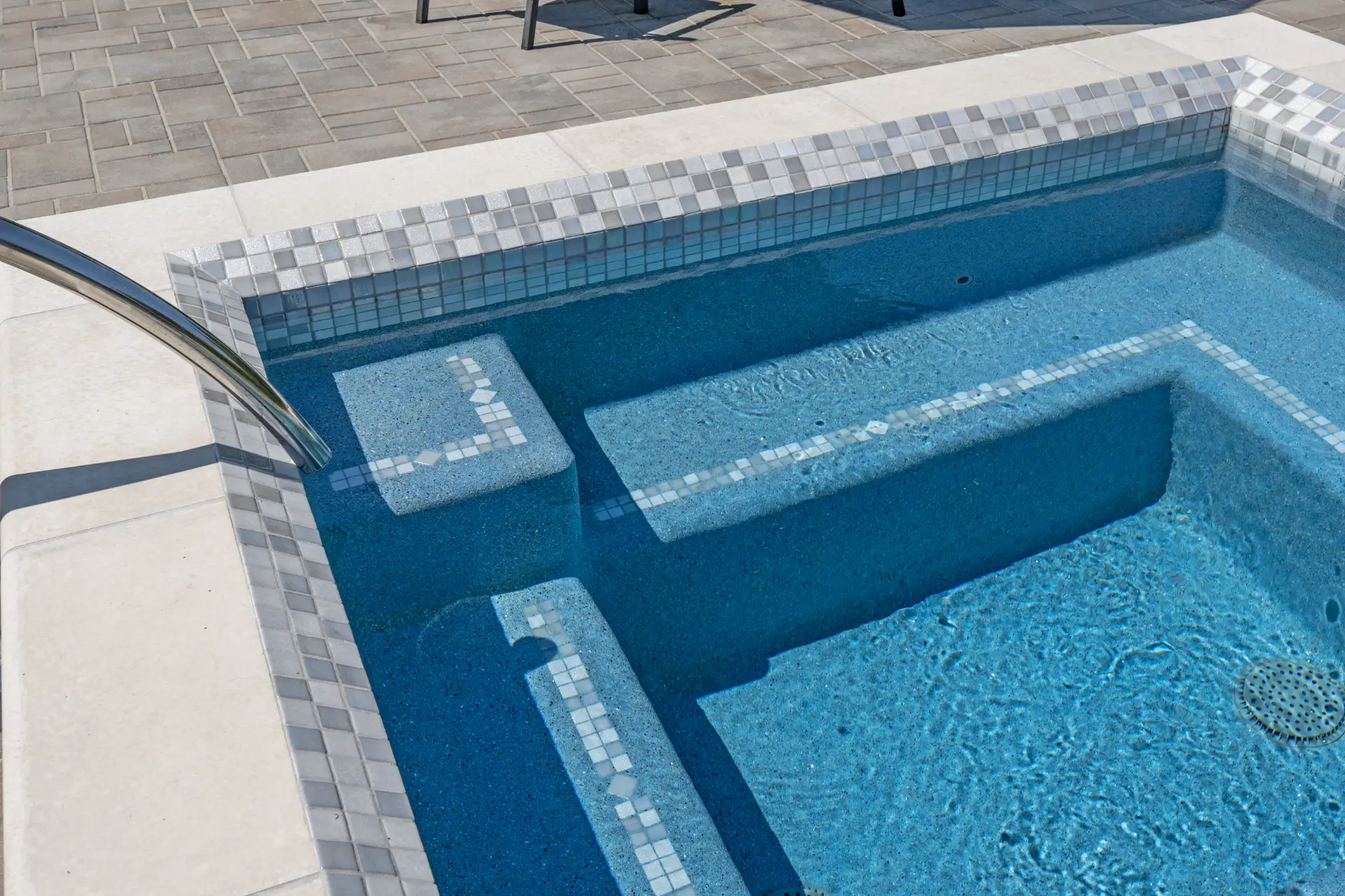
If you only change one thing about how an older pool looks, change the waterline. Tile sits right where your eye lands, and dated tile with a calcium line along it makes the whole yard read old. Coping, the cap around the edge of the pool, sets the transition from water to deck. When the coping is cracked or loose, water gets behind it and the problem spreads.
Our Yorba Linda pool and spa is a good example of how much the tile and coping carry.
A few practical notes on tile and coping:
Equipment is the part of a pool remodel nobody sees and everyone feels on the utility bill. A lot of older Orange County and Los Angeles pools still run single-speed pumps that move water at full power for hours a day.
Pumps. California regulates the motors used in pool pumps. Under the California Energy Commission’s Title 20 rules, replacement dedicated-purpose pool pump motors of 0.5 total horsepower or more, manufactured on or after July 19, 2021, have to be variable-speed. In practice, if your pump motor fails, the replacement you can buy is a variable-speed motor. A variable-speed pump can run long and slow for filtration and ramp up only when you need it for the spa, a cleaner or a water feature.
Filters. Cartridge, sand and DE filters trade off cleaning effort against water clarity. Size should match the pump and pool volume; a remodel is a good time to fix an undersized one.
Heaters. California’s 2025 energy code changed what kind of heat a newly installed pool or spa heating system can use. The Energy Commission’s pool and spa heating compliance form lists the options: a solar pool heater sized to at least 60% of the pool surface, a heat pump pool heater, 60% on-site renewable or recovered energy, a solar and heat pump combination, or another system the Commission approves. The same form lists an exception for alterations to existing pools and spas that already have heating systems or equipment, and requires a pool cover on outdoor pools and spas with electric or gas heating. Heaters also can’t use a standing pilot light and need an on-off switch on the outside of the unit. Whether your project counts as an alteration or new heating is a call the building department makes, and we sort it out at the plan stage, not at inspection.
Automation. One controller runs the pump schedule, heater, lights, valves and spa jets. It’s easiest to add while the pad is already being rebuilt.
A spa is one of the most common additions we’re asked about. It can be raised above the pool with a spillway, set flush at the pool edge, or built as a separate unit near the patio. Whether your pool can take an attached spa depends on the shell, the space at the edge, the existing plumbing and how far the equipment pad sits from where the spa will go.
A spa adds its own heater, jet pump or shared-pump valving, and lighting. A new spa heater falls under the energy rules above, and a spa addition is permitted work, which brings in the safety requirements below.
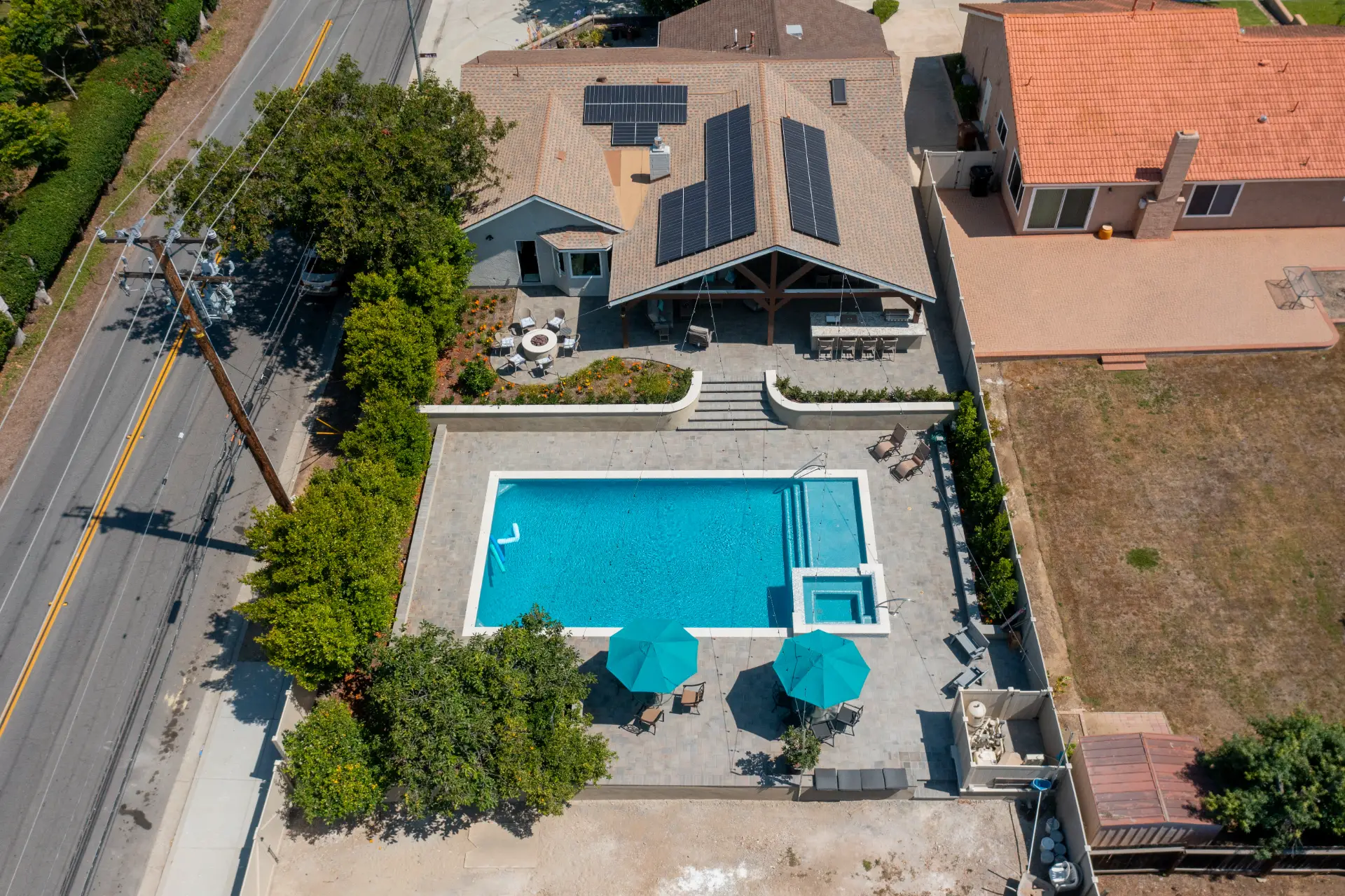
This is the section most homeowners don’t expect. California’s Swimming Pool Safety Act, Health and Safety Code section 115920 and following, applies when a building permit is issued for a new pool or spa, and also when a permit is issued for remodeling an existing pool or spa at a single-family home. In that case, the pool has to be equipped with at least two of seven listed drowning prevention safety features, as the statute text in this county handout on the Swimming Pool and Spa Safety Act shows. The list includes:
The statute also says certain pairs don’t count as two separate features, and the building inspector checks the features before final approval. We pick the combination with you during design, so it fits how your family uses the yard and doesn’t hold up the final.
Drain covers are the other safety item people ask about. The federal Virginia Graeme Baker Pool and Spa Safety Act sets the anti-entrapment rules. Its specific retrofit requirements, such as compliant covers on every drain and backup protection on single main drains, apply to public pools and spas. For a private backyard pool, the practical effect is that drain covers sold in the U.S. have to meet the federal standard, and replacing old covers with compliant ones during a remodel is cheap insurance. We include it in the scope.
Not every pool repair needs a permit, but a lot of pool remodeling does. Adding a spa, changing the shape or depth, running new gas or electrical, installing a new heater, and structural repair to the shell are the usual triggers. The building department decides, and some cities are stricter than others.
Who issues the permit depends on where you live. Each incorporated city in Orange County runs its own building department. Unincorporated areas go through OC Public Works, which takes pool and spa applications through myOCeServices and publishes its pool and spa plan check process. In Los Angeles County, unincorporated areas use EPIC-LA, the county’s online permit and inspection system, which lists pool permits as their own permit type. The City of Los Angeles and other incorporated cities have their own departments.
Many Orange County HOAs also require architectural approval for decking, fencing and equipment location. We build both approvals into the schedule. Our general contractor page covers how we handle permits across both counties.
California licenses pool work specifically. The C-53 Swimming Pool classification covers building pools, spas and hot tubs. A Class B general building contractor, which is the license Horizon holds, can take a prime contract on a project that involves at least two unrelated building trades, or a specialty project if the B contractor also holds that specialty license. The Contractors State License Board’s building official guide lays out those rules, and CSLB’s consumer guide Before Swimming Pool Construction notes that B contractors may build pools when they hold the swimming pool specialty classification or subcontract with a C-53 contractor.
Here’s what that means for you. Horizon takes pool remodeling as part of multi-trade backyard projects, where the pool work sits alongside decking, hardscape, electrical, gas, patio covers or outdoor kitchens. The pool-specific trades work under our contract as licensed subcontractors. Whoever you hire, ask for the license numbers of every company that will work on your pool and check them on the CSLB site.
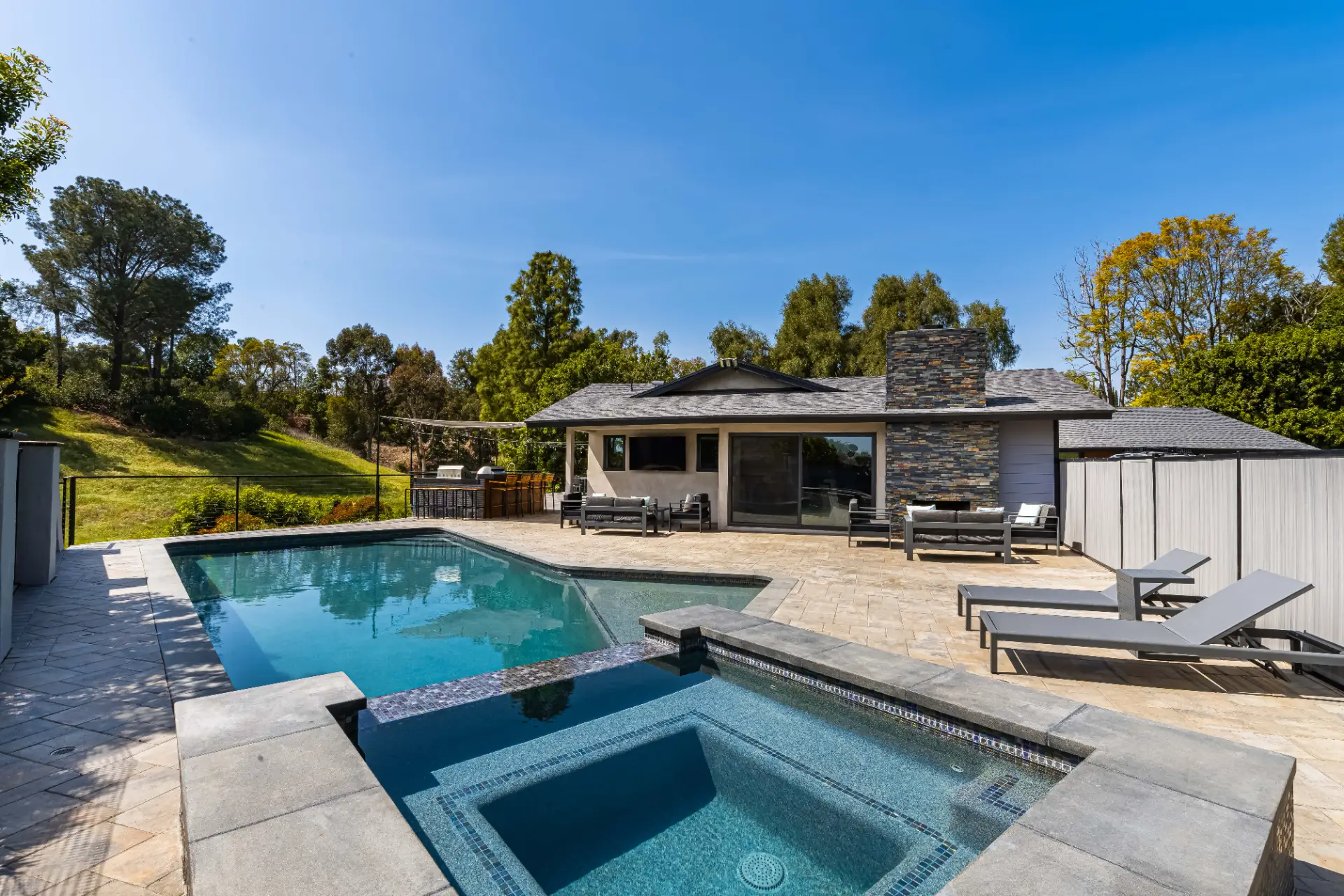
Projects vary, but the order doesn’t change much.
We don’t publish price ranges, because two pools the same size can need very different work. The factors that move a budget most:
After the walk-through you get a written proposal broken out line by line, so you can see where the money goes and decide what to do now and what can wait.
Because we do design-build, a pool remodel can carry the rest of the backyard with it. Some pairings that come up often:
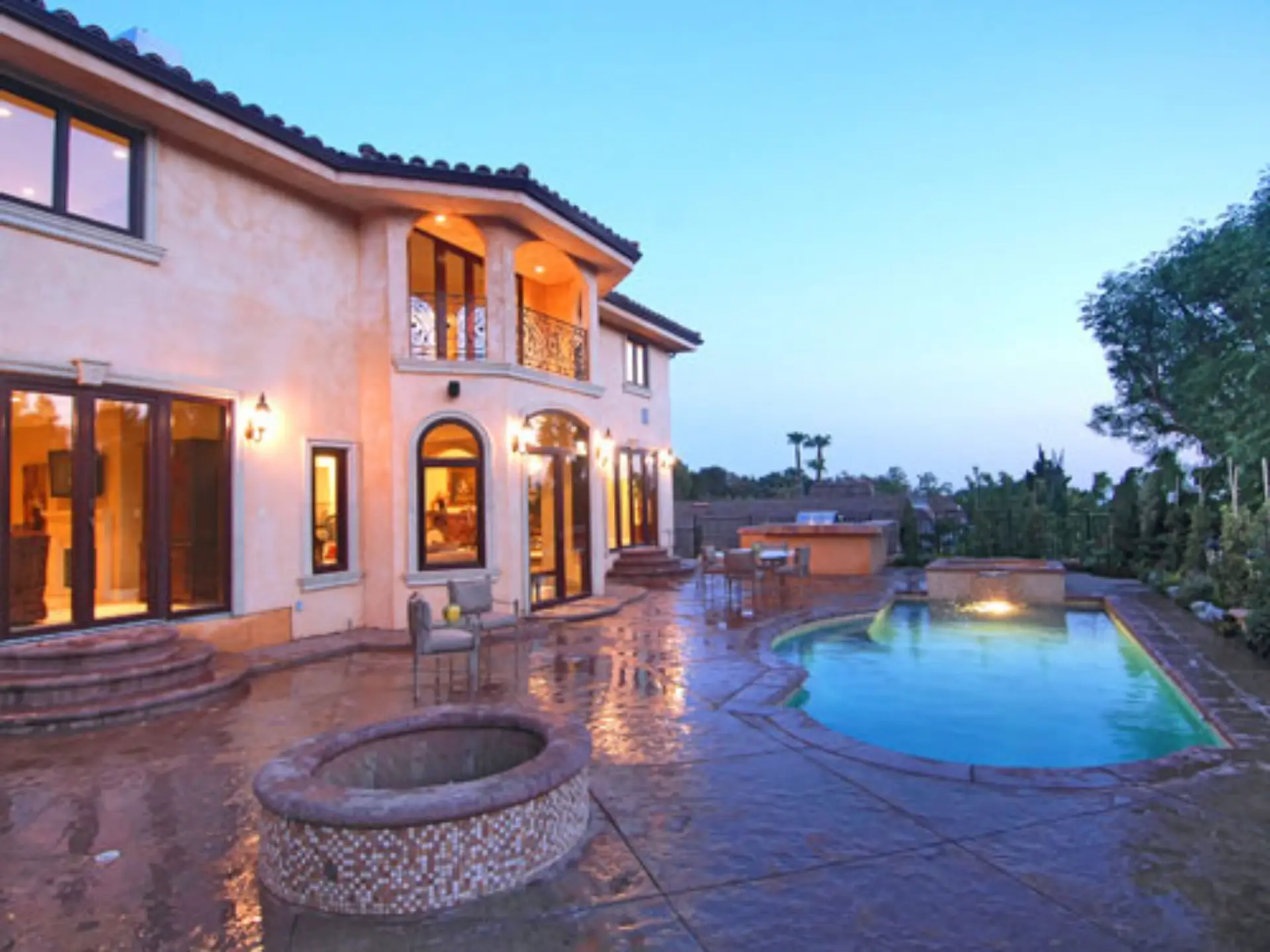
We work throughout Orange County and Los Angeles County from our Fullerton design center and Laguna Hills office, including Yorba Linda, where our pool and spa project is. If you need a pool remodel in Los Angeles County, we cover it too. Call (714) 449-9035 if you’re not sure we serve your area.
We work across four Southern California counties. Each county page links to the city pages, with local permit and housing details for every city we serve.
If the problem is in one spot, like a chipped step or a few loose tiles, a repair may be enough. If the whole surface is rough, stained or flaking, it’s time to resurface. We look at it in person and tell you which it is.
Many do. Adding a spa, changing the shell, adding a heater, or running new gas or electrical usually requires one. Your city’s building department, or OC Public Works in unincorporated areas, makes the call. We handle the application either way.
If a building permit is issued for remodeling your pool or spa at a single-family home, California law requires at least two of seven listed drowning prevention features. We plan them into the design so they pass inspection the first time.
If your pump motor fails and needs replacing, California’s Title 20 rules require replacement motors of 0.5 total horsepower or more to be variable-speed. Many owners switch during a remodel rather than waiting for the old one to fail.
Often, yes. It depends on the shell, space at the pool edge, plumbing and equipment location. We look at all four during the walk-through and show you options in the design.
Yes. That’s how most of our pool remodels happen. One design covers the pool, deck, hardscape, kitchen and landscaping, and one permit set and one schedule cover the work.
Ready to fix the pool you already have? We’ll walk the yard with you and show you what a pool remodel would look like with the rest of the backyard. Schedule a consultation or call (714) 449-9035.
