
New Construction in Lawndale
Most new construction in Lawndale begins with a lot that already carries a house on it. The city filled in quickly after World War II, growing as a South Bay bedroom community before incorporating in 1959, and the result is block after block of compact single-story tract houses on small lots with closed-off rear kitchens. Those homes can remodel well, but when a structure sits on a tired foundation or simply cannot support what the owner needs, a tear-down rebuild is often the cleaner solution. We manage the full scope under one contract, from the initial lot review through design, engineering, permits with the City of Lawndale Community Development Department, demolition, and final inspection.
Services We Offer
Engineering & Title 24
Permits & Plan Check
New Build ADUs

Our New Construction Process in Lawndale
New construction in Lawndale typically starts not with a floor plan but with the lot itself. Because most properties here are compact postwar parcels built out in the decades after World War II, a zoning review, a boundary and topographic survey and a soils report come first, establishing what the site can support and what the foundation will require. Design follows that groundwork: site plan, floor plans and elevations, developed with you until the layout fits the way you actually live. Structural engineering and Title 24 energy documents are prepared alongside the drawings so the plan set enters the City of Lawndale Community Development Department complete.
While the city reviews the plans, we respond to any comments, coordinate utility work and handle the asbestos survey and air district notification required before demolition can begin. Once permits issue, the old structure comes down and the build runs in sequence: foundation, framing, rough plumbing, electrical, mechanical and fire sprinkler lines, insulation, then exterior and interior finishes. One project manager runs the job from start to finish and is present for every inspection through final sign-off.
Read More →
Permits, Engineering, and Code Requirements for New Construction in Lawndale
All permits for new construction in Lawndale go through the City of Lawndale Community Development Department. Because no unusual local overlay applies here, two things govern the review: the current building code and the condition of whatever exists on the lot today. For a new house, that review touches several departments. Planning checks setbacks, height, lot coverage, and floor area against zoning. Building plan check reviews structural calculations and energy documentation. The fire department evaluates sprinkler systems and site access, and public works addresses grading, drainage, any street trenching, and the driveway approach.
If the lot currently holds one of Lawndale’s postwar tract houses, demolition is a separate permit with its own requirements. Most building departments ask that gas and electric service be disconnected and the sewer lateral capped before that permit is issued. The South Coast AQMD also requires an asbestos survey and advance notification before most demolitions proceed. Given that the majority of homes in Lawndale date to the 1940s and 1950s, an asbestos survey is a routine early step rather than an afterthought. Once the lot is clear, utilities get sized for the new structure. Fire sprinklers commonly require a larger water meter and service line, and a larger home with solar and modern electrical loads may need a new utility service, which adds lead time to the schedule.
A geotechnical report comes before foundation design. It identifies expansive clay, old fill, groundwater, and slope conditions. In state-mapped liquefaction or landslide zones a site-specific investigation is required. The structural engineer uses the report to design footings, post-tensioned slabs, or grade beams, and then lays out shear walls, hold-downs, and beams to meet California’s seismic requirements. On sloped lots, the same report drives the retaining wall design and grading plan, and the soils engineer typically signs off on footing excavations before concrete is placed.
Energy compliance follows Title 24 standards, and new single-family homes must include solar PV. Some measures require field verification by a third-party HERS rater. If the site falls within a CAL FIRE Fire Hazard Severity Zone, wildland-urban interface standards apply: a Class A roof, ember-resistant vents, ignition-resistant exterior materials, and multipane tempered windows. Inspections follow each construction stage, from foundation forms and reinforcing steel through framing, rough mechanical and electrical work, insulation, and the final sign-off.
Other Remodeling Services We Offer
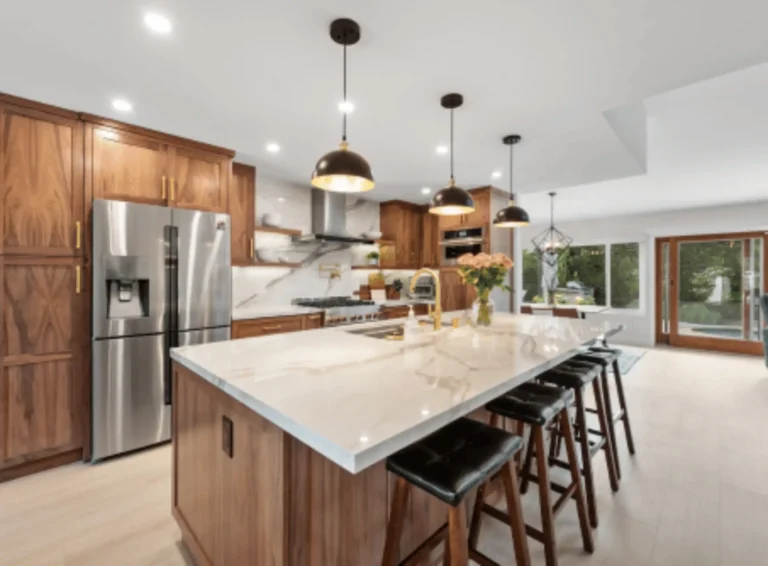
A kitchen remodel touches more trades than any other room in the house: layout, cabinetry, plumbing, electrical, ventilation and finishes. Horizon designs and builds kitchen remodels under one contract, from the measured layout to the final inspection.
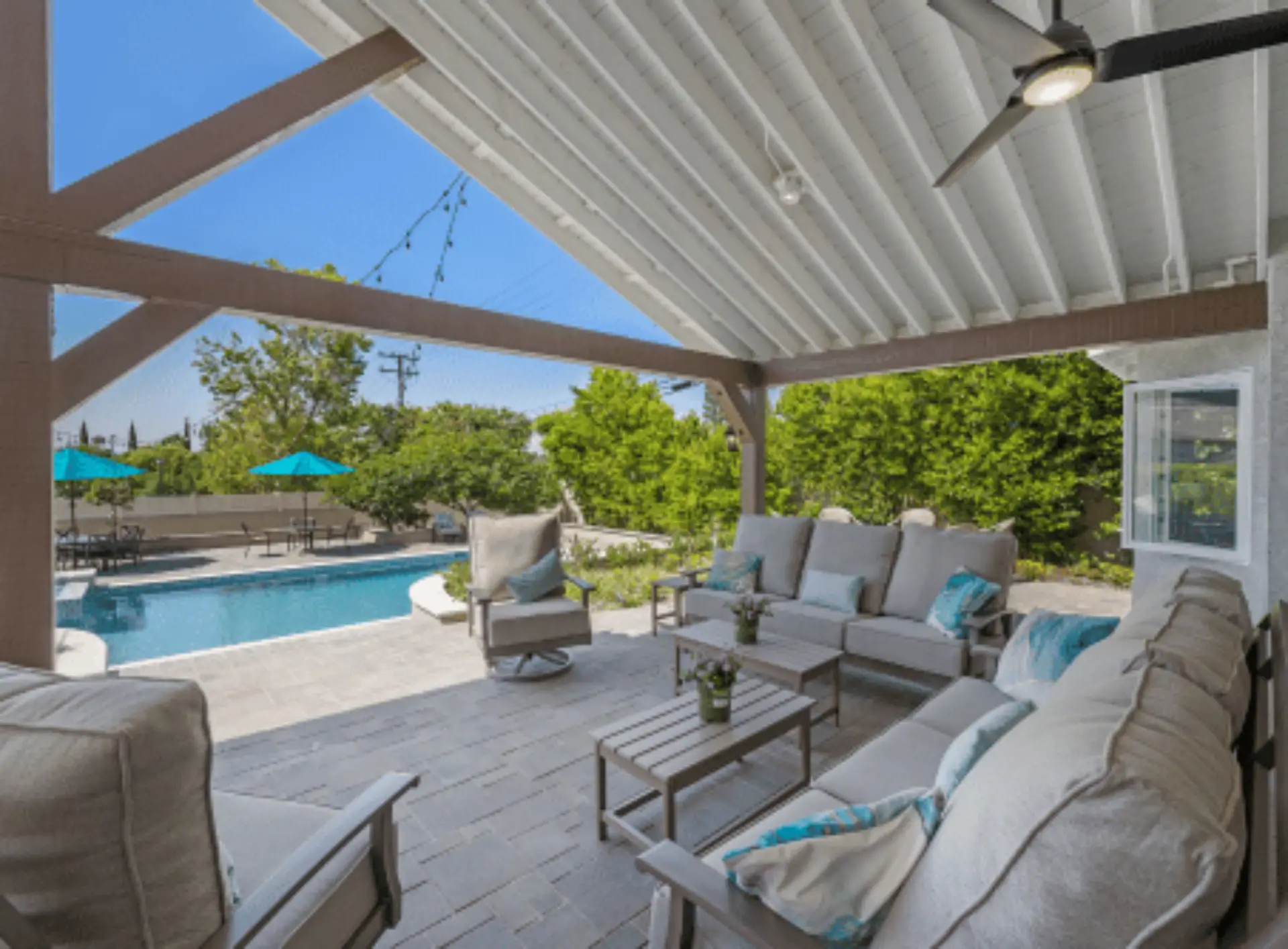
Whether you envision a classic Southern California pool or a fully customized backyard oasis, Horizon Construction & Remodeling delivers the highest level of quality and service. Our comprehensive pool design and remodeling services cover everything from layout and decking to built-in BBQs and final touches like landscaping. Let Horizon be your trusted partner in transforming your backyard into the perfect outdoor retreat.

If you are planning a complete bathroom remodel or simply want to change your tub, shower, update your plumbing fixtures, or make the space more efficient, our team at Horizon will help you through the process with expert advice, professional craftsmanship, and affordable options with beautiful results. Learn more about our bathroom remodeling services.
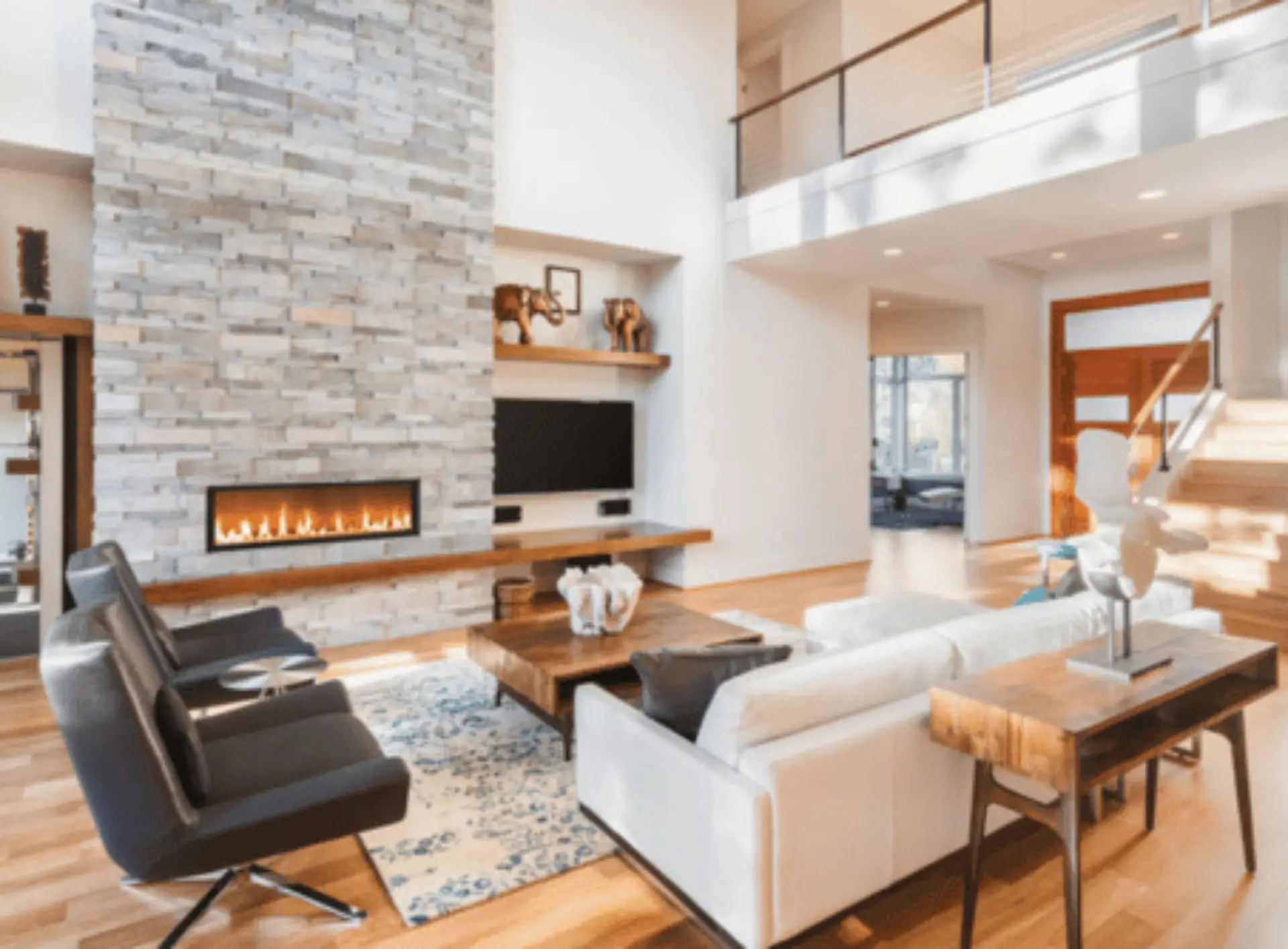
Transform your space with our expert interior work services. We offer a comprehensive range of solutions — from space planning and custom design to the selection of high-quality finishes and materials. Our team of experienced professionals works closely with you to create a space that’s both functional and stylish, tailored to your unique needs, goals, and budget. Whether you’re updating a single room or overhauling your entire interior, we bring precision, creativity, and craftsmanship to every project.
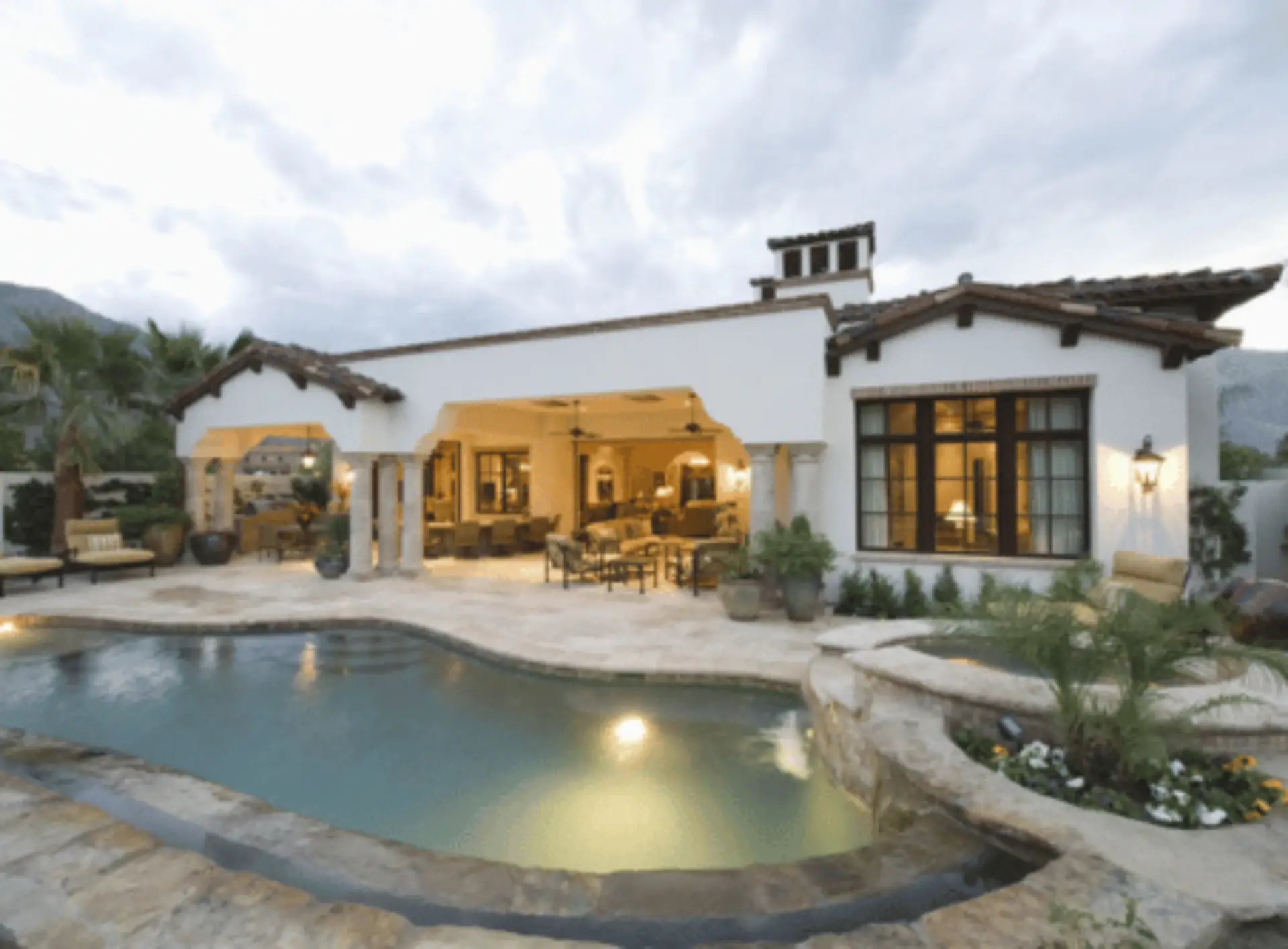
At Horizon, we believe your home is more than just four walls — it’s where life happens. It’s the place you relax, gather with family and friends, and create lasting memories. That’s why we offer a full range of exterior work services designed to elevate your outdoor living space. From patios and hardscaping to custom decks and exterior renovations, we help turn your vision into a dream yard that complements your lifestyle and enhances curb appeal.

At Horizon Construction & Remodeling, our expert team includes a dedicated design and planning division that works hand-in-hand with licensed architects and structural engineers. We take care of everything — from detailed plans and blueprints to securing city permits — so you don’t have to deal with delays or red tape. Our goal is to streamline the process and provide a fully approved set of documents that aligns with both your vision and city regulations, saving you time and stress.
Why Choose Horizon Remodeling For New Construction in Lawndale
Horizon Construction and Remodeling has been building in Southern California since 2009, and we work as a licensed Class B general building contractor, bonded, with our license active and verifiable through the CSLB. A new home is the largest project a residential contractor takes on, so we encourage you to look us up before you sign anything.
We work design-build, which means design, engineering coordination, permits, and construction all sit under one contract with one project manager. The team that develops your plans is the same team responding to plan check comments from the City of Lawndale Community Development Department and building the house. In Lawndale, where most of the existing housing stock dates to the postwar decades, new construction is governed primarily by current building code and the specifics of the lot itself, with no unusual local overlay complicating the process. CALGreen requirements, fire sprinkler considerations, and energy compliance under Title 24 enter the design at the first sketch rather than arriving later as change orders.
Lawndale lots tend to be compact, a characteristic of the South Bay tract development that shaped most of the residential blocks here, and we assess what your specific parcel can realistically support before plans are drawn. Call us at (714) 449-9035 to discuss your lot.
Schedule a Consultation
New Construction FAQ
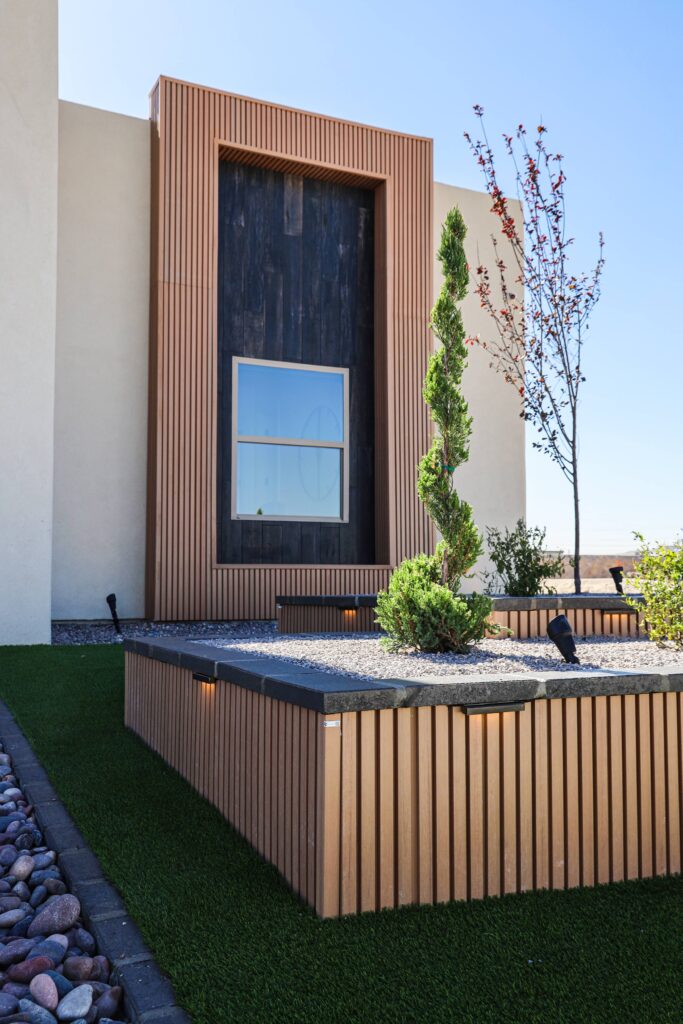
Should I rebuild or remodel my house in Lawndale?
Whether a rebuild or a whole home remodel makes more sense depends on the condition of the house and what your lot allows. In Lawndale, where most homes are compact postwar tract houses built on small lots, it is common to find foundations with age-related issues, outdated systems throughout, and original layouts with the kitchen tucked away at the back. A new construction build tends to make sense when foundation problems are serious, when nearly every system needs replacement, when you want a second story the existing structure cannot carry, or when zoning allows a larger or better-positioned house. If the structure is sound and the changes are mainly about layout and finishes, a whole home remodel is usually the simpler path through the City of Lawndale Community Development Department. We walk the property with you and give you a straight comparison before you commit to anything.
What permits does a new home need?
Replacing a postwar tract house in Lawndale typically requires a demolition permit for the existing structure and a building permit for the new one, along with grading, utility, and driveway permits from public works. Plans go through the City of Lawndale Community Development Department, with planning, fire, and public works each signing off. Lots in a fire hazard severity zone receive additional fire-code review. We prepare all submittals and manage comments and resubmittals throughout the process.
How long does it take to build a new home?
Custom home construction in Lawndale takes time, and design and permitting can run just as long as the build itself. Plan check with the City of Lawndale Community Development Department commonly takes several months, and the age and condition of a postwar lot can add steps to the feasibility review. Construction of a custom home often runs around a year, longer for larger footprints or significant site work. Weather, utility scheduling, and inspection availability all affect the timeline, so we work out a project-specific schedule after we review your lot.
What drives the cost of building a new home?
New construction costs in Lawndale are shaped by several overlapping factors, and understanding them upfront keeps the budget honest. Complexity drives price first: second stories, long spans, and irregular footprints all add labor and material. Foundation work depends on soil conditions, and site preparation including demolition, grading, and utility upgrades can vary considerably from one postwar lot to the next. Finish level throughout the home adds another layer of cost, and city impact fees along with school fees on new square footage are set by the City of Lawndale and the applicable district. Once we assess feasibility, we break the budget into these categories so you can see exactly where your decisions matter.
Do new homes in California need solar and fire sprinklers?
Yes, California code applies in full to new construction in Lawndale. The California Residential Code requires automatic fire sprinklers in new one- and two-family homes, which affects both water service sizing and how ceilings are laid out. Solar PV has been mandatory on new single-family homes since the 2019 energy standards took effect, and the 2025 Title 24 update raises the bar further for permits filed on or after January 1, 2026. CALGreen layers on requirements for water efficiency, construction waste recycling, indoor air quality, and EV charging readiness. We account for all of it from the first day of design.
Can you build an ADU along with the new house?
Yes, adding an ADU during a new build is the most straightforward approach. Sizing water, sewer, and electrical service for both units at once avoids the retrofitting that older postwar tracts in Lawndale often require. The site plan can give each unit a separate entry and outdoor area from the start. State law permits ADUs on most single-family lots, though setbacks, height, and parking rules still apply. Horizon can permit the ADU alongside the main house or as a separate project, and we build guest houses as well.
Explore More in Lawndale
Horizon is a licensed Class B general building contractor serving Lawndale and the surrounding Los Angeles County communities.
Other Services in Lawndale
New Construction Nearby
More New Construction Service Areas Near Lawndale
View Our New Construction Areas of Service
- New Construction in Agoura Hills
- New Construction in Alhambra
- New Construction in Arcadia
- New Construction in Artesia
- New Construction in Azusa
- New Construction in Baldwin Park
- New Construction in Bell
- New Construction in Bell Gardens
- New Construction in Bellflower
- New Construction in Calabasas
- New Construction in Carson
- New Construction in Cerritos
- New Construction in Claremont
- New Construction in Commerce
- New Construction in Compton
- New Construction in Covina
- New Construction in Cudahy
- New Construction in Culver City
- New Construction in Diamond Bar
- New Construction in Downey
- New Construction in Duarte
- New Construction in El Monte
- New Construction in El Segundo
- New Construction in Gardena
- New Construction in Glendale
- New Construction in Glendora
- New Construction in Hawaiian Gardens
- New Construction in Hawthorne
- New Construction in Hermosa Beach
- New Construction in Huntington Park
- New Construction in Inglewood
- New Construction in La Cañada Flintridge
- New Construction in La Habra Heights
- New Construction in La Mirada
- New Construction in La Puente
- New Construction in La Verne
- New Construction in Lakewood
- New Construction in Lancaster
- New Construction in Lomita
- New Construction in Long Beach
- New Construction in Los Angeles
- New Construction in Lynwood
- New Construction in Manhattan Beach
- New Construction in Maywood
- New Construction in Monrovia
- New Construction in Montebello
- New Construction in Monterey Park
- New Construction in Norwalk
- New Construction in Palmdale
- New Construction in Palos Verdes Estates
- New Construction in Paramount
- New Construction in Pasadena
- New Construction in Pico Rivera
- New Construction in Pomona
- New Construction in Rancho Palos Verdes
- New Construction in Redondo Beach
- New Construction in Rolling Hills Estates
- New Construction in Rosemead
- New Construction in San Dimas
- New Construction in San Fernando
- New Construction in San Gabriel
- New Construction in San Marino
- New Construction in Santa Fe Springs
- New Construction in Santa Monica
- New Construction in Sierra Madre
- New Construction in Signal Hill
- New Construction in South El Monte
- New Construction in South Gate
- New Construction in South Pasadena
- New Construction in Temple City
- New Construction in Torrance
- New Construction in Walnut
- New Construction in West Covina
- New Construction in West Hollywood
- New Construction in Whittier