
General Contractor in Talbert
Any Talbert remodel that crosses trade lines and requires a building permit calls for a licensed general contractor to keep the work legal and coordinated. The homes here are almost entirely tract houses built in the 1960s and 1970s, after large housing tracts replaced farmland following the 1957 incorporation, and updating one of those houses in neighborhoods like Green Valley or Tiburon typically means framing, electrical, plumbing and finishes all happening within a single project. Horizon Construction and Remodeling is a California Class B general building contractor serving Talbert, and we manage remodels, additions and new construction from the first drawing through permit, inspections and final sign-off.
Services We Offer
Room Additions & ADUs
Whole Home Remodels
New Construction


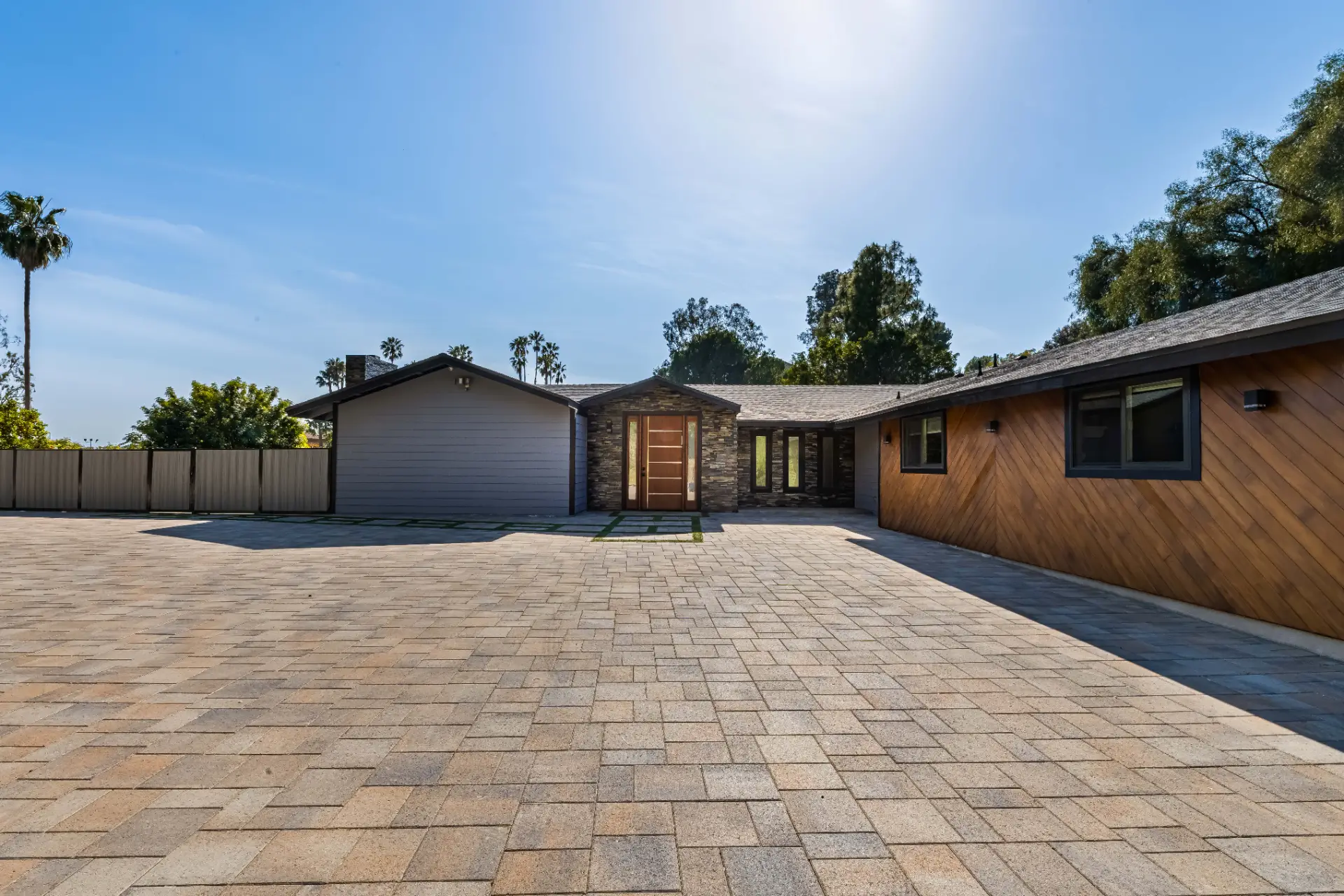

About Working with a General Contractor in Talbert
How We Manage Your Project From Start to Finish
Every project we take on as a general contractor in Talbert begins with a site visit and a written scope of work. Because the typical home here is a 1960s or 1970s tract house on a flat rectangular lot, we know what to look for before drawings go to the City of Fountain Valley Building and Safety Division for plan check. We prepare drawings in-house, bring in a structural engineer or energy consultant when the work requires one, and put the payment schedule, start date and completion date into the contract before anything is signed.
Selections happen before construction starts, so no tile or fixture decision holds up the crew. One project manager sequences demolition, framing, and all specialty trade work, orders materials ahead of need, and calls for each required inspection. Any change you request gets a written change order showing the effect on cost and schedule. We close the permit and walk the finished project with you before the job is done.
Read More →
Pulling permits for a remodel in this part of Fountain Valley is straightforward compared to some Southern California cities. Applications go through the City of Fountain Valley Building and Safety Division, and because no unusual local overlay applies here, the adopted building code and any applicable association rules are the primary framework. That simplicity still requires careful preparation. We review those requirements before a contract is signed, so the drawings we submit reflect what plan check expects rather than needing to be revised after the fact.
The housing stock shapes what that permit review actually covers. Most homes in this area were built during the 1960s and 1970s, when large tracts replaced the farmland that defined the region before the 1957 incorporation of Fountain Valley. Tract construction from that era follows consistent floor plans and structural patterns, which helps during design, but it also means aging systems and materials that need attention when walls open up. We account for that reality in the scope before the project starts.
Understanding contractor licensing matters before you hire anyone for a multi-trade project. In California, a Class B general building license is required to act as prime contractor on a job that involves at least two unrelated trades or any framing on a structure where people live or work. A specialty licensee works legally within one trade but cannot coordinate the broader project as the prime. Before signing a contract, look up the license number on the Contractors State License Board website and confirm it is active, in the correct classification, and in the company’s legal name. The record also shows whether a bond and workers’ compensation coverage are on file.
A few other protections apply to most California home improvement projects. State law under Business and Professions Code 7159 requires a written contract that includes a description of the work, a payment schedule tied to progress, approximate start and completion dates, and required consumer notices. Down payments and progress payments are capped by statute, so a contractor requesting a large sum up front is worth scrutinizing. Subcontractors and suppliers who go unpaid can file a mechanics lien against your property regardless of what you paid the general contractor, which is why collecting lien releases as payments go out is a sound practice on any job.
Other Remodeling Services We Offer
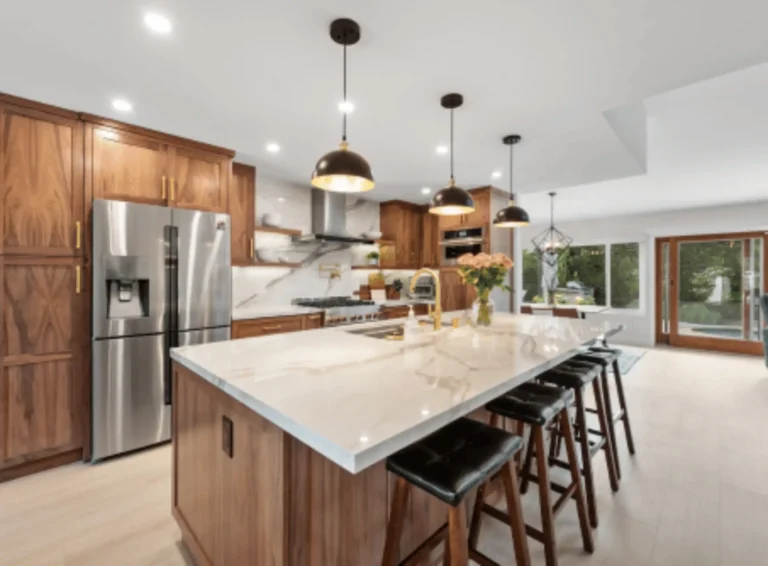
A kitchen remodel touches more trades than any other room in the house: layout, cabinetry, plumbing, electrical, ventilation and finishes. Horizon designs and builds kitchen remodels under one contract, from the measured layout to the final inspection.

Whether you envision a classic Southern California pool or a fully customized backyard oasis, Horizon Construction & Remodeling delivers the highest level of quality and service. Our comprehensive pool design and remodeling services cover everything from layout and decking to built-in BBQs and final touches like landscaping. Let Horizon be your trusted partner in transforming your backyard into the perfect outdoor retreat.

If you are planning a complete bathroom remodel or simply want to change your tub, shower, update your plumbing fixtures, or make the space more efficient, our team at Horizon will help you through the process with expert advice, professional craftsmanship, and affordable options with beautiful results. Learn more about our bathroom remodeling services.

Transform your space with our expert interior work services. We offer a comprehensive range of solutions — from space planning and custom design to the selection of high-quality finishes and materials. Our team of experienced professionals works closely with you to create a space that’s both functional and stylish, tailored to your unique needs, goals, and budget. Whether you’re updating a single room or overhauling your entire interior, we bring precision, creativity, and craftsmanship to every project.

At Horizon, we believe your home is more than just four walls — it’s where life happens. It’s the place you relax, gather with family and friends, and create lasting memories. That’s why we offer a full range of exterior work services designed to elevate your outdoor living space. From patios and hardscaping to custom decks and exterior renovations, we help turn your vision into a dream yard that complements your lifestyle and enhances curb appeal.

At Horizon Construction & Remodeling, our expert team includes a dedicated design and planning division that works hand-in-hand with licensed architects and structural engineers. We take care of everything — from detailed plans and blueprints to securing city permits — so you don’t have to deal with delays or red tape. Our goal is to streamline the process and provide a fully approved set of documents that aligns with both your vision and city regulations, saving you time and stress.
Why Choose Horizon Remodeling For General Contractor in Talbert
Why Fountain Valley Homeowners Choose Horizon
- Licensed by the California Contractors State License Board (CSLB), Class B General Building, active and in good standing since 2009.
- In business for over 15 years, with experience across the kind of 1960s and 1970s tract homes that make up most of the housing stock in this area.
- Licensed and bonded, with workers’ compensation covering everyone on your job site.
- The license on your contract is the same one used to pull permits through the City of Fountain Valley Building and Safety Division.
- One project manager oversees drawings, engineering coordination, permits, and construction under a single contract, so accountability never shifts between parties.
- Our work is where a Class B general contractor is most useful: whole-home remodels, room additions, ADUs, structural changes, and ground-up new construction that require coordination across multiple trades.
Sequencing mistakes between trades cost time and money. Having the team that planned the project also build it closes that gap. Any specialty trade portions, such as electrical, plumbing, or mechanical work, are performed by appropriately licensed subcontractors coordinated by Horizon under that same contract. Our license record is public and straightforward to verify with the CSLB.
Schedule a Consultation
General Contractor FAQ


Do I need a general contractor for my project in Talbert?
For any project that requires a building permit, involves two or more unrelated trades, or touches framing, California generally requires a licensed contractor holding the right classification, and for multi-trade work that classification is a Class B general building contractor. You do have the option to act as an owner-builder on your own home, but that puts scheduling, inspections, and any employer obligations for hired workers squarely on you. On an addition, a whole-home remodel, or a new build in a 1960s or 1970s tract neighborhood like Fountain Valley, most homeowners find managing all of that amounts to a second full-time job.
Who pulls the permit, and who deals with the inspector?
Yes, Horizon pulls permits directly under our license through the City of Fountain Valley Building and Safety Division, which handles all building activity in this area since Talbert is the pre-1957 name for what is now Fountain Valley rather than a separate jurisdiction. We carry responsibility for passing every inspection from foundation and framing through rough electrical, plumbing, and mechanical all the way to final. Any item an inspector flags gets corrected and re-inspected promptly. We close out the permit at the end so the work stays on record with the city, which matters when you refinance or sell.
How long does a general contractor project take?
How long a project takes depends on what the work involves and how the local building department is running at the time. For homes in Fountain Valley, the area historically known as Talbert, permits and plan check go through the City of Fountain Valley Building and Safety Division, and the review timeline shifts with their current workload and how many correction rounds come back. Design and engineering for a larger remodel or addition can take several weeks to a few months before construction even begins. A single-room remodel may run several weeks once work starts, while a whole-home remodel, addition, or new build typically takes many months. We give you a realistic schedule after the scope is defined, not a guarantee.
What drives the cost of a general contractor project?
Cost is driven primarily by scope and structure, not by the city you happen to be in. In Fountain Valley, where Talbert once stood before the 1957 incorporation, most homes are 1960s and 1970s tract houses on flat rectangular lots, and work on them often involves moving walls, adding square footage, or altering a roofline, each of which brings in engineering, framing, and additional inspections. Upgrading electrical service, replacing aging plumbing, or meeting current Title 24 energy requirements adds further to the total. Soil conditions, site access, and finish selections all factor in as well. The single most avoidable cost driver is changes made after construction begins, which is why we lock in every selection before the first nail goes in.
How much can a contractor ask for up front?
Under California Business and Professions Code 7159.5, the down payment on a home improvement contract is capped by state law, and every payment after that is supposed to reflect work actually completed rather than money collected in advance. A contract that demands a large share of the total before any work begins is a warning sign worth taking seriously. Our contracts follow that statute, tie each payment to a defined stage of work, and include the consumer notices the law requires.
Do you use subcontractors?
Yes, like nearly every general contractor, we use licensed specialty subcontractors for certain trades, and those subs work on our schedule and under our direct supervision. We take responsibility for their work, pay them and our suppliers on time, and provide lien releases as payments go out, so a preliminary notice from a supplier is routine paperwork rather than a problem. For homeowners in Fountain Valley’s Talbert-area neighborhoods, you deal with one project manager throughout, not a rotating list of separate trades.
Explore More in Talbert
Horizon is a licensed Class B general building contractor serving Talbert and the surrounding Orange County communities.
Other Services in Talbert
General Contractor Nearby
More General Contractor Service Areas Near Talbert
View Our General Contractor Areas of Service
- General Contractor in Aliso Viejo
- General Contractor in Anaheim
- General Contractor in Brea
- General Contractor in Buena Park
- General Contractor in Costa Mesa
- General Contractor in Coto De Caza
- General Contractor in Cowan Heights
- General Contractor in Cypress
- General Contractor in Dana Point
- General Contractor in Dove Canyon
- General Contractor in East Irvine
- General Contractor in Foothill Ranch
- General Contractor in Fountain Valley
- General Contractor in Fullerton
- General Contractor in Garden Grove
- General Contractor in Huntington Beach
- General Contractor in Irvine
- General Contractor in La Habra
- General Contractor in La Palma
- General Contractor in Ladera Ranch
- General Contractor in Laguna Hills
- General Contractor in Laguna Niguel
- General Contractor in Laguna Woods
- General Contractor in Lake Forest
- General Contractor in Las Flores
- General Contractor in Lemon Heights
- General Contractor in Los Alamitos
- General Contractor in Midway City
- General Contractor in Mission Viejo
- General Contractor in Newport Beach
- General Contractor in Newport Coast
- General Contractor in North Tustin
- General Contractor in Orange
- General Contractor in Placentia
- General Contractor in Portola Hills
- General Contractor in Rancho Santa Margarita
- General Contractor in Rossmoor
- General Contractor in San Clemente
- General Contractor in San Juan Capistrano
- General Contractor in Santa Ana
- General Contractor in Seal Beach
- General Contractor in South Laguna
- General Contractor in Stanton
- General Contractor in Tustin
- General Contractor in Villa Park
- General Contractor in Westminster
- General Contractor in Yorba Linda