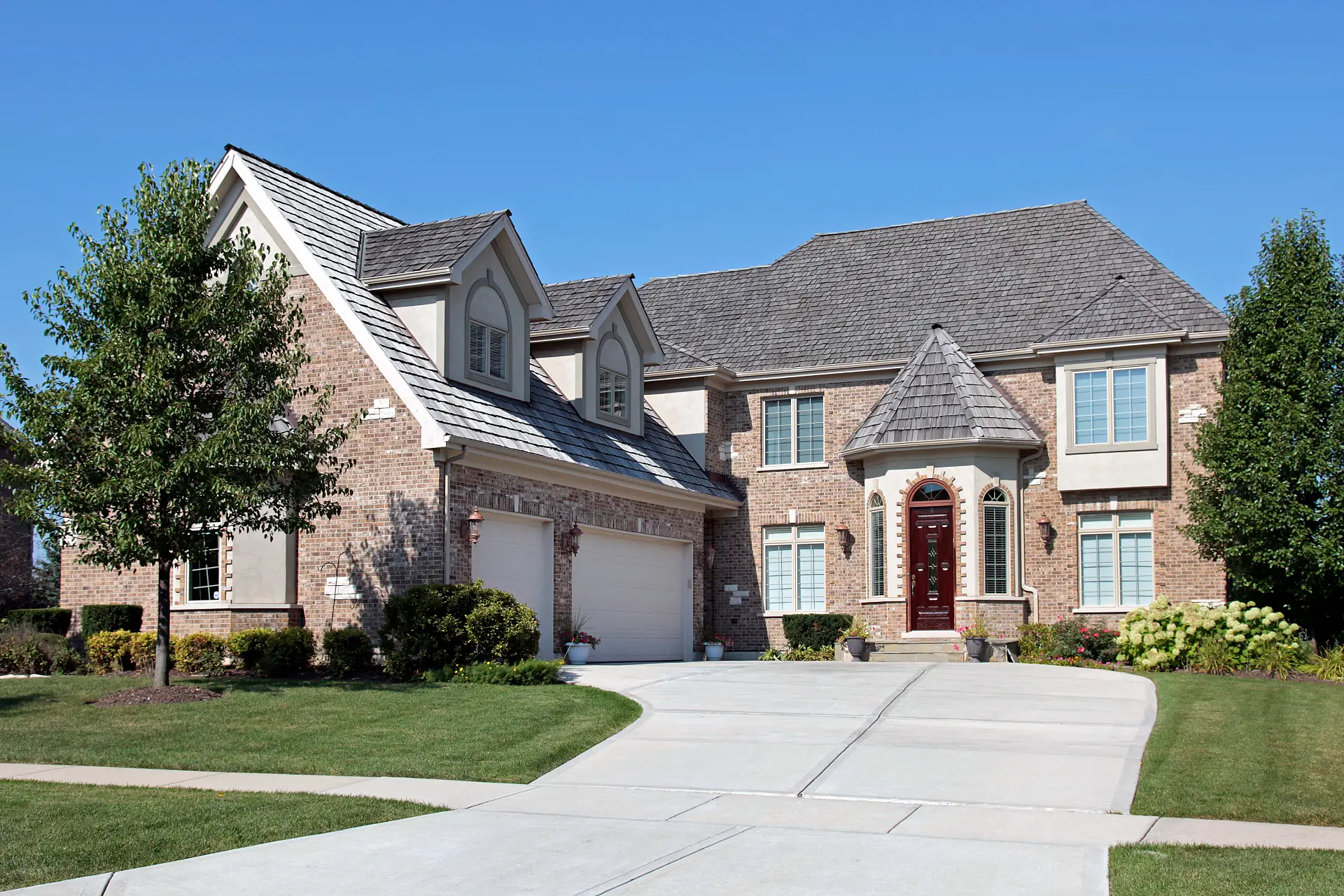
Many potential homeowners never give a second thought to driveway materials when looking at homes. However, a driveway can serve as an important part of the first impression of any home. A driveway can connect the property to the streetand is often one of the first things that someone notices when they pull up to a property. The types of driveway materials vary, but the most commonly found types are: concrete, asphalt, gravel, and brick/paving stones. No matter what type of driveway you install, you can add value, a unique style and curb appeal to your home.
Driveways typically can last a few decades with proper care and maintenance. The most basic, and often least expensive, are gravel driveways. Concrete and asphalt fall closely behind in price, and can also add value to your home. Some homeowners prefer to spend a little more money to gain a more customized driveway.

Asphalt and concrete driveways remain the two most popular driveway materials in the United States. However, there are pro’s and con’s to each. Asphalt can be easier to repair and costs less to install. However, concrete typically requires less maintenance overall and also lasts longer.
Brick and paver driveways can provide up to 25 years of use, can create the biggest visual impact for a driveway, and require little maintenance.
While the paver and brick looks can add great curb appeal to the home, the downside is that they can shift over time. If a paver or brick is broken, it can be easily replaced, but this type of driveway is initially more expensive than asphalt or concrete.
Stamped concrete can be used, not only for a driveway, but also for walkways and patios. Patterns can be utilized that mimic tile, brick, stone and other custom designs. Stamped concrete can be less expensive than installing brick pavers and also requires less maintenance when sealed properly.
Gravel or crushed stone are the least expensive of all driveway options and offer a variety of choices to choose from. This type of driveway material can be installed quickly and can also be added to over time as the rocks settle. The downside of gravel is that it has a shorter life expectancy and typically doesn’t add much, if any, property value.
Now that we have outlined several options of driveway building materials, here are a few key tips for driveway installation and maintenance:
• If you are hiring a contractor, then be sure that the contractor is knowledgeable and has experience with the specific type of driveway material that you are installing. When looking for a contractor, make sure to compare bids and also ensure that the bid includes the base materials.
• Do not hire a contractor based on getting a deal on “leftover” materials. These can be difficult to match and may not be enough to cover the entire driveway surface.
• Always get a written estimate and do a site review with the contractor to ensure that everyone agrees to the surface area to be covered.
• Consider the slope of the driveway and different drainage options. You want to verify that the water won’t pool and the driveway will be sloped away from the home and garage.
• Know where any underground utilities are in relation to the driveway.
• Site preparation is key to building a driveway that will last. Don’t skimp on this important step of any driveway construction.
• When considering what to choose as the driveway surface, make sure to take into account cost, regional weather, upkeep, stain removal and crack repairs.
If you are planning to give the exterior of your home a little love with a new driveway, check out Horizon at https://horizonremodelinginc.com]. Horizon will add artistic and aesthetic appeal to your home with a unique, beautiful driveway!
A driveway can serve as the first impression that visitors receive of your home. By installing and maintaining an inviting driveway, you can guarantee that visitors are welcomed by the pathway to your home. Not only can a driveway enhance the appearance of your home, but it can also add character as well. No matter what type of driveway you choose, you can ensure that it will last for many years to come and will also be an excellent investment.
Planning Your Driveway Materials Project
If you are planning a project like this in Orange County or Los Angeles County, Horizon Construction & Remodeling can help with design, permits and construction through our exterior remodeling services. For more background, see the Contractors State License Board.
What to Know Before Choosing Driveway Materials in Orange County
Picking the right driveway materials is not just about curb appeal. The decision affects drainage, long-term maintenance costs, resale value, and even whether your project requires a permit. After working on exterior projects across Fullerton, Anaheim, Whittier, and surrounding cities, we have seen the same questions come up again and again. Here is what homeowners often overlook when planning a driveway replacement or new installation.
Base Preparation Is the Real Foundation
No matter which driveway materials you choose, the base layer underneath determines how long everything lasts. A poorly compacted subbase leads to cracking, settling, and drainage problems within just a few years. Before any surface material goes down, the soil should be graded, compacted, and built up with the correct depth of aggregate base. Skipping or rushing this step is the most common reason driveways fail prematurely.
Drainage and Slope Matter More Than Most Homeowners Expect
Southern California gets intense rainfall in short bursts. A driveway that slopes toward the garage or the foundation can send water exactly where you do not want it. Local building departments in Orange County often have specific requirements about how driveways must drain toward the street or a designated drainage area. We always review slope and drainage during our initial site walkthrough so there are no surprises after the work is done.
Matching Driveway Materials to Your Home Style
The material you choose should complement the architecture of the home, not compete with it. Consider these common pairings:
- Concrete pavers or brick: Well-suited to craftsman, Spanish, and traditional-style homes common throughout Orange County neighborhoods.
- Stamped concrete: A practical middle ground for homeowners who want the look of stone or tile without the cost of individual pavers.
- Exposed aggregate concrete: Adds texture and visual interest while improving traction, a good fit for modern and contemporary exteriors.
- Standard broom-finish concrete: Clean and low-maintenance, appropriate for nearly any home style and budget.
- Asphalt: Works best for longer driveways where cost per square foot is a driving factor.
HOA Rules and Local Permit Requirements
Many neighborhoods in Orange County are governed by homeowner associations that have specific rules about which driveway materials are permitted, what colors are allowed, and even how wide a driveway can be. Beyond HOA guidelines, some cities require a permit when a new driveway connects to a public sidewalk or curb cut. Horizon Construction and Remodeling, licensed under CSLB #938230, handles permit coordination as part of our standard process so the project stays compliant from start to finish. When you work with a team that understands local requirements, you avoid costly corrections after the job is done. Driveway materials choices are only as good as the planning and execution behind them.
Related Services
Contact Horizon Construction and Remodeling today for a free on-site estimate and let our team help you choose the right driveway materials for your home and budget. Call (714) 449-9035.